1. Focus on Food Security during Uncertainty
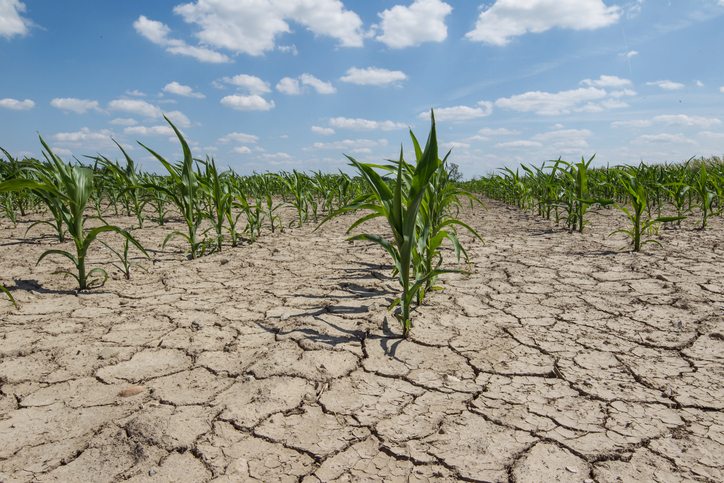
The forecasts are no longer conditional. An extended, significant El Niño event is locking into place across Southeast Asia. For farmers in Thailand, this means our typical planting, rain, and heat schedules are about to collapse. We are facing a triple threat: prolonged drought, parched topsoil, and a heat dome effect that will test the physiological limits of every crop.
The forecasts are no longer conceptual. A significant El Niño event is locking into place globally, triggering unpredictable weather patterns from the Pacific to the Atlantic. While West Affrica’s response to El Niño is complex, one factor remains constant: the threat to food security posed by climate instability. For West African farmers, standard practice is no longer enough. The volatility El Niño brings can cause our traditional rainfall patterns to fail us just when crops are most vulnerable. We are facing a landscape where unpredictable weather will test the resilience of every farm, demanding that we shift toward biological solutions that safeguard our soil and yields, regardless of what the skies deliver.
2. Build Resilience to El Nino Now
While large-scale climate patterns cannot be changed, your farm’s response can be managed. The single most important concept to internalize today is that resilience is not built during a crisis; it is built before it.
Wait until your irrigation water disappears or your trees are already shedding leaves, and it may be too late to save the harvest. You must intervene while your soil still holds some residual moisture.
Here is the urgent, step-by-step strategy to prepare your land—using microbial biotechnology—to act as a defensive shield against the coming extremes.
2.1 Shift from Chemical to Biological Logic
Conventional, chemical agriculture often works on a short-term logic: feed the plant, kill the pest. During a severe El Niño, this logic breaks down. When water is scarce, synthetic chemical fertilizers—often composed of salts—become locked in the dry soil. They cannot reach the plant roots. At worst, they can burn existing root tissue, aggravating water stress.
a) The Strategy: You must stop investing in short-term chemical inputs that require high water usage and shift resources into biological solutions that regenerate the soil’s inherent ability to survive. This is not just an ecological decision; it is a vital economic survival tactic. Biological systems continue to function in moisture-deficient environments where chemical systems fail.
2.2 Activate the Soil “Sponge” (Immediate Focus)
Healthy soil should have a porous, sponge-like structure. These pore spaces are created by beneficial microbes, fungi, and decomposed organic matter. This structure is what captures rainfall (rather than letting it run off) and stores it at the root zone for weeks. Severe heat and chemical dependency degrade this structure, turning your soil into compacted, hydrophobic dust.
a) The Immediate Intervention: Bio-Plant: If you apply a high-quality microbial biotech product, such as Bio-Plant, now—while the soil is not yet completely parched—you initiate an urgent microbial takeover.
b) Fixing Nitrogen and Unlocking Phosphorus: These microbes will begin functioning at the root zone, continuing to provide nutrition to your crop without needing a flood irrigation transport mechanism.
c) Creating Soil Aggregates: Beneficial bacteria secrete sticky extracellular polysaccharides (EPS) that bind soil particles together into tiny clumps, creating the vital pore spaces needed for water retention.
d) Why it must happen now: Microbes require a baseline of moisture to multiply and build these water-saving soil structures. Intervening while you still have water allows the biology to build its own survival habitat within your soil before the heat reaches its peak.
2.3 Protect against Metabolic Stress and Heat Collapse
Heat stress is an invisible killer. When temperatures spike above a plant’s comfort zone (which can be as low as $30^{\circ}C$ depending on the variety), its entire metabolism changes. To conserve water, the plant shuts down its stomata (pores), stopping photosynthesis. Essentially, the plant enters “bunker mode”—it stops growing, stops producing fruit or seed, and consumes its own energy reserves to survive.
Extended heat collapse means zero yield.
 admin
admin