Using Bio-Utility to Turn Rubbish into Compost
1. What is Bio-Utility and How Does It Work?
1.1 What It Does
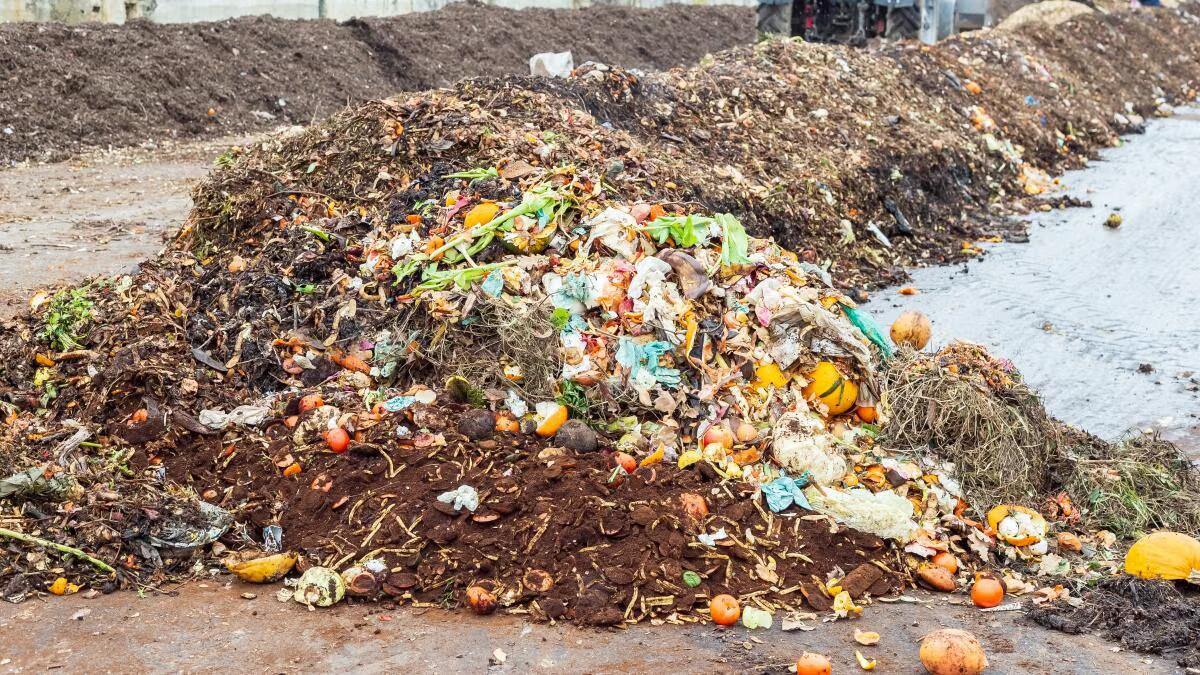
Bio-Utility can be used effectively to treat rubbish and turn it into compost.
1.2 Micro-organism Ingredients
Bio-Utility is a very concentrated microbial liquid, with a heavy concentration of the following micro-organisms:
Bacillus
Nitrobacter
Nitrosomonas
Pseudomonas
Other genii of micro-organisms according to the problem
1.3 Treating Rubbish
Bio-Utility can be used to:
Remove the foul smell caused by piles of rubbish.
Degrade rubbish in landfills and turn it into fertiliser.
1.4 Where It Can Be Used
Rubbish dumps.
Distilleries and breweries.
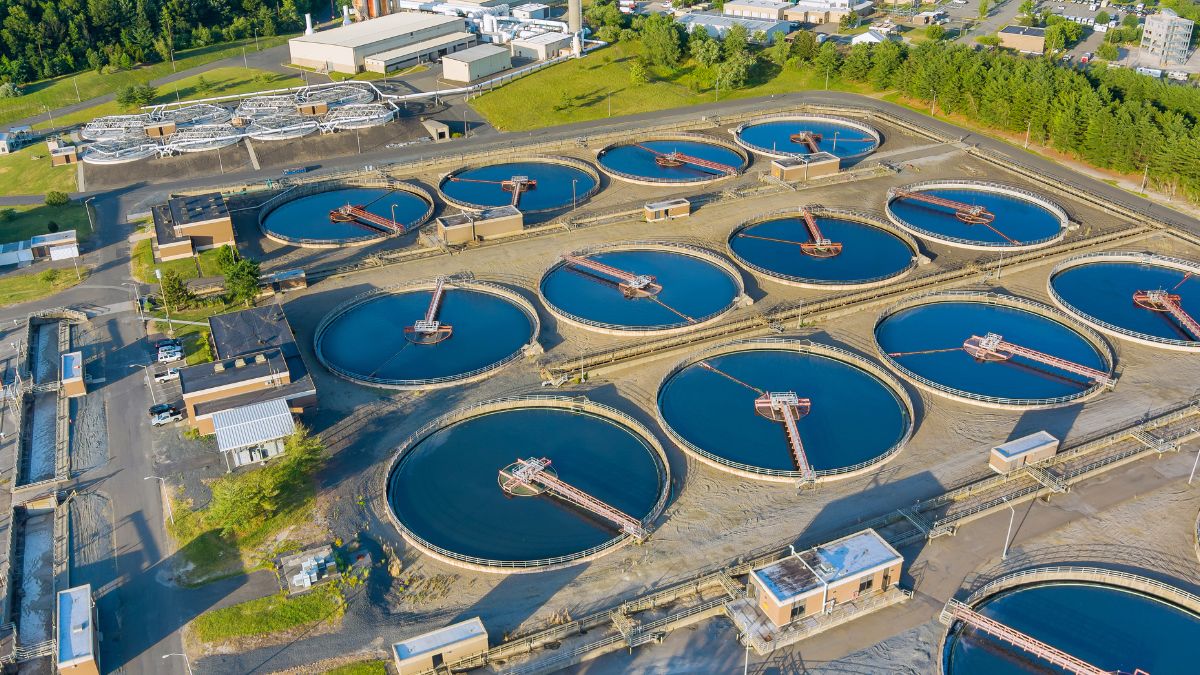
Municipal wastewater treatment plants.
Oil industry wastewater treatment plants.
Residential and factory wastewater treatment.
Treatment of lakes and ponds, including those on golf courses.
Household and commercial property drains, drain pipes, and septic tanks.
Hotels and restaurants.
1.5 Treats Rubbish Biologically
Bio-Utility provides biological rubbish and wastewater treatment by using micro-organisms (bacteria), which multiply very rapidly, to degrade organic waste naturally. 1cc contains 1 billion cells. Each cell multiplies into one million cells per day.
In wastewater, this results in Biochemical Oxygen Demand (BOD) reduction, Chemical Oxygen Demand (COD) reduction, and smell control.
1.6 The Bacteria Produce Enzymes
Bio-Utility provides a heavy concentration of micro-organisms to rubbish and wastewater.
As the bacteria metabolise, grow and divide, they produce enzymes.
The bacteria are literally factories for the production of enzymes.
1.7 The Enzymes
The enzymes which are manufactured by the bacteria are appropriate to the environment in which the enzymes will be working.
You therefore have automatic production of the right enzyme for the biological reduction of any waste material because Bio-Utility contains the right bacteria to start with.
1.8 How the Enzymes Work
Enzymes in biochemical reactions act as organic catalysts. The enzymes create the reactions, and after having caused it, split off from them and are unchanged.
After the biochemical reactions are complete and products are formed, the enzyme is released to catalyse another reaction.
1.9 The Enzymes Break Down the Organic Matter
The enzymes break down the organic matter into water soluble nutrients, which the bacteria digest. The bacterial digestion process consumes the organic matter.
Using complex chemical reactions, the organic waste is metabolised down to water and Carbon Dioxide, thereby providing the bacteria with energy for growth and reproduction.
1.10 The Action of the Enzymes
The enzymes decompose the organic wastes instantly
The microorganisms in the formula degrade the waste decomposed by the enzymes totally by means of biological oxidation.
Because the organic waste is consumed by the bacteria, it is then no longer present to produce odours, sludge, pollution, or unsightly mess.
1.11 Bio-Utility Removes the Chemicals
The smell disappears as the chemicals are consumed by the microorganisms in Bio-Utility.
The microorganisms break down the chemicals into different forms, which are then made harmless or are consumed by the relevant microorganisms.
1.12 Ensures Effective Treatment of Organic Matter
Foul smells arise from a lack of oxygen and by the slow decay of organic matter in the water.
The strong concentration of aerobic and anaerobic micro-organisms in Bio-Utility is very effective in breaking down organic matter.
1.13 Eliminates Foul Smells
The enzymatic and bacterial action removes the source of the smell problems.
Removes foul smells from rubbish, drains, ponds, golf course lakes, and wastewater lagoons.
Degrades solid wastes (such as in portable toilets and septic tanks) and eliminates foul smells.
Prevents blockages and foul smells in bathroom and kitchen drains.
Eliminates foul smells from kitchen exhausts.
Degrades the organic deposits in grease traps biologically.
2. How to Apply Bio-Utility to Treat Rubbish and Turn it into Compost
2.1 The Common Solution:
Rubbish is burned
2.2 Effect of the Micro-organisms on the Rubbish Piles
Ideally, the non-degradable rubbish (metal, polystyrene, cans, etc.) should be separated from the degradable, organic rubbish first.
If this cannot be done, while the rubbish is decomposing, people can separate the non-degradable rubbish from the piles of rubbish.
After spraying the rubbish, there will be much less smell and danger for the rubbish pickers.
2.3 Method 1 for Treating Rubbish and Turning It Into Compost
For municipal rubbish dumps where the organic matter has not been separated from the non-biodegradable rubbish:
Spray Bio-Utility on the rubbish. The dosage should be 1 litre of Bio-Utility mixed with 200 litres of water per 5 MT tonnes of rubbish.
Leave the rubbish for 35-40 days before using it as compost.
1 litre of Bio-Utility is enough per 400 square metres of land. 10 bottles per 4,000 square metres.
2.4 How to Increase the Beneficial Effects
There is a special way to increase the growth rate of the micro-organisms and to increase the beneficial effects of the micro-organisms on the wastewater. It requires a little extra work, but it is worth it. This booster mixture will be described to customers.
2.5 Method 2 for Treating Rubbish and Turning It Into Compost
For municipal rubbish dumps where the organic matter has not been separated from the non-biodegradable rubbish and the booster has been added:
Pour the booster mixture into 200 litres of water and spray it over 5 cubic metres of rubbish (5 MT).
Leave the rubbish for 35-40 days before using it as compost.
If the rubbish smells very badly, then apply the mixture to 50 litres of water, and spray this.
2.6 The Micro-organisms Decompose the Rubbish
Bio-Utility contains anaerobic and aerobic micro-organisms.
This means that the decomposition can take place both inside the piles of rubbish as well as near and on the surface. This speeds up the speed of decomposition.
2.7 Turn Over the Rubbish
Use bulldozers to turn over the rubbish every week (or more often) so that the rubbish deep down in the piles can receive oxygen.
2.8 Effect of the Micro-organisms on the Rubbish Piles
The micro-organisms will decompose the organic matter, and after about 35-40 days the rubbish piles will be about 50% lower.
The organic matter can then be screened and turned into compost, which can be bagged and sold.
The volume of rubbish will decrease by about 50%.
2.9 Some of the Benefits
Significant reduction of:
foul smell (No need to spray perfume on the rubbish!)
mosquitoes, flies, crows, and pests.
gas emissions.
Reduced BOD and COD levels in water flowing from the rubbish piles.
The remaining rubbish with be rich in micro-organisms, Nitrogen, Phosphorus, and minerals, and can be used to make excellent compost.
Some screening of non-degradable rubbish may be necessary before the compost can be sold.
2.10 Method 3 for Treating Rubbish and Turning It into Compost
For residential rubbish dumps where the organic matter has been separated from the non-biodegradable rubbish:
Mix the booster mixture with 1,000 litres of water.
Spray over 25 cubic metres (25 MT) of rubbish.
Leave the organic waste for 35-40 days before using it as compost.
2.11 Method 4 for Treating Rubbish and Turning It into Compost
For treating rubbish in holes where the organic matter has been separated from the non-biodegradable rubbish:
Separate the degradable rubbish from the metal, polystyrene, and cans as they take up space in the ground. Alternatively, grind up the rubbish.
Dig a hole 20 metres x 20 metres x 1-metre high (400 square metres).
Place 100 tonnes of rubbish in the hole at the bottom of the hole.
2.12 Method 4 for Treating Rubbish and Turning It Into Compost (cont.)
Spray Bio-Utility on the rubbish. The dosage should be 1 litre of Bio-Utility mixed with 1,000 litres of water per 100 tonnes of rubbish.
1 litre of Bio-Utility is enough per 400 square metres of land. 10 bottles per 4,000 square metres.
Leave the rubbish to degrade for 4-6 months.
3. Using the Rubbish-Compost in Soil Preparation Methods
3.1 Some Farmers Will Be Mistrustful
Some farmers will be mistrustful about using only compost made from rubbish when preparing the soil. Consequently, here are 3 methods in which the rubbish compost can be used in the soil preparation.
3.2 Method 1
Normal Soil Preparation
The normal ratio is 1 litre of Bio-Plant mixed with 5 MT of organic matter per hectare.
Spread the organic matter mixture over the hectare and spray 500 litres of water over it before ploughing it into the soil.
Compost Composition Per 5 Tonnes:
Chicken Dung: at least 1,500 kgs.
Cow dung, ground up dried grass, crop debris, etc.: 3,000 kgs.
Earth (black soil is the best): 500 kgs.
Rubbish-Compost Composition Per Hectare:
10 MT when the soil is good.
Up to 20 MT when the soil is poor.
Adding the following will be very beneficial:
Chicken Dung: 1-1.5 MT per hectare (very good!)
Cow dung, ground up dried grass and crop debris, etc.: 1-1.5 MT per hectare (if available)
Earth (black soil is the best): 500 kgs (if available)
Leave the organic matter in the soil for 2 weeks before planting the crop.
Leaving the soil for about 14 days allows the microorganisms to multiply adequately before the crop is planted.
3.3 Method 2
Preparing the Soil with Bio-compost
Dig a hole 5 m long x 1 m wide x 1 m deep. This will be enough to make 5 tonnes of organic fertiliser.
If you cannot dig a hole, then do the following on the ground instead and cover it with plastic.
Rubbish-Compost Composition Per Hectare:
10 MT when the soil is good.
Up to 20 MT when the soil is poor.
Adding the following will be very beneficial:
Chicken Dung: 1-1.5 MT per hectare (very good!)
Cow dung, ground up dried grass and crop debris, etc.: 1-1.5 MT per hectare (if available)
Earth (black soil is the best): 500 kgs (if available)
Place inside the hole layers of the organic matter, as follows:
A 25 cm layer of the rubbish-compost.
Then, place on top a 25 cm layer of chicken dung and cow dung.
Then a 25 cm layer of dried grass, crop debris, etc.
Place on top of that a 25 cm layer of earth.
Then keep placing alternating 25 cm layers on top.
3.4 Method 2
Preparing the Soil with Bio-compost
Spray every layer with the following mixture:
For each tonne of compost mix 20 litres of water with Pro-Plant (200 cc) and Bio-Plant (200 cc).
Use 1 litre of Bio-Plant and 1 litre of Pro-Plant per 5 tonnes and 2 litres of each for 10 tonnes.
Adjust the amount for extra tonnage.
Then cover over the hole with a plastic cover so that no air gets in. Leave it for 6-8 weeks.
The longer the farmer leaves it, the more time the micro-organisms have to multiply in the fertiliser mixture before the compost is placed on the soil.
Open the plastic and turn over and mix the compost every week.
3.5 Method 3
Special Compost with the Bio-fertilisers
This booster method is highly recommended and will cause the microorganisms to multiply much more. It will be explained to customers.