The Nature of the Enzymes and Probiotic Bacteria in Belta Probiotics
Belta Probiotics Contains:
Enzymes: Protease, Lipase, and Amylase
Probiotics: Bacillus Subtillus and Lactobacillus Phantatrum
These are referred to below.
1. Enzymes and Probiotic Bacteria are Keys to Healthy Digestion
The gastrointestinal system is a complex network of organs and glands that extract nutrients and water from food we eat so the body can use it. The food we and animals consume is processed by the gastrointestinal system in six phases:
Mental Preparation: Prepares the stomach for the meal that will be eaten.
Ingestion: Taking food into the body (eating).
Peristalsis: The movement of food through the gastrointestinal (GI) tract.
Digestion: The breakdown of food by both mechanical and chemical processes.
Absorption: The passage of digested food from the digestive tract into the vascular and lymphatic systems for distribution to the cells.
Elimination: The elimination of indigestible substances and waste products from the body.
Digestion itself is divided into two categories: mechanical and chemical.
Mechanical digestion is physical movement that aids chemical digestion. After initial breakdown by chewing, food is churned by the smooth muscles of the stomach and the small intestine, mixing it with enzymes that start the chemical reactions.
Chemical digestion is a series of complex chemical reactions that break down large carbohydrate, lipid, and protein molecules into molecules small enough to enter the blood vessels. Chemical digestion occurs through the action of several different enzymes, such asamylases, proteases, and lipases. For optimal digestion to occur, all these processes must work together in a delicate, synchronized balance. If any part of this complex system under-performs or over-performs, physical problems can result.
2. How important are enzymes to stomach digestion?
Without enzymes, digestion could not take place and the food we eat could not be absorbed and utilized by our bodies. Enzymes are complex proteins produced by living cells and they start chemical reactions in the body. Enzymes are present in the digestive juices. They act upon food, breaking it down into simpler components the body can use for energy.
3. What happens if digestive enzymes do not work adequately?
Inadequate digestion is thought to be a significant cause of food allergies. When not digested completely, food can initiate allergic reactions in the body, causing inflammation and immune sensitivity. This can lead to chronic inflammatory conditions and certain types of arthritis.
4. What enzymes are involved in the digestion process?
Many enzymes are part of the digestion process. The three main enzymes involved in digestion are amylase, protease, and lipase. Other enzymes, such as sucrase, lactase, and maltase, have a significant secondary function in digestion.
Amylase breaks down carbohydrates. Saliva contains amylase, which initiates the digestion of dietary starches. Pancreatic secretions also contain amylase. Amylase breaks down starch into several disaccharides (simpler molecules).
Disaccharides, which include lactose, maltose, and sucrose, are further broken down into simple sugars by the enzymes lactase, maltase, and sucrase respectively. These simple sugars can then be absorbed through the small intestine to help energy production.
Proteases break down protein. Protein digestion begins in the stomach with the action of the protease, pepsin. The stomach’s acidic environment activates this enzyme. Pepsin is deactivated in the alkaline environment of the intestine. However, certain plant-based proteases remain active even in more alkaline environments. Proteins are further broken down by pancreatic enzymes in the alkaline environment of the intestine. Most proteins are ultimately broken down into amino acids, the building blocks of life.
Lipases break down fat. Fat digestion accelerates in the second part of the small intestine with the action of the pancreatic lipases. These enzymes break down fat into essential fatty acids. The lipase enzymes, along with bile salts, are responsible for the absorption of the fat-soluble vitamins: A, D, E, and K4.
5. What are Probiotic Bacteria?
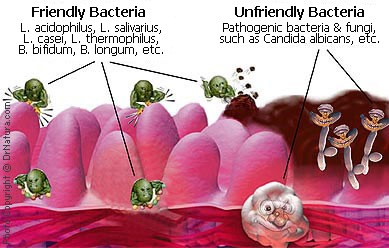
Probiotic bacteria are beneficial nontoxic live bacteria that are necessary for life and do not cause disease (non-pathogenic). The probiotic bacteria most commonly studied include members of the Lactobacillus and Bifidobacterium group. Because of the Lactobacillus and Bifidobacterium’s ability to break down lactose, these probiotic bacteria are also known as lactic acid bacteria. Both probiotic bacteria are well-studied and are available in foods and dietary supplements.
6. How do Probiotic Bacteria work?
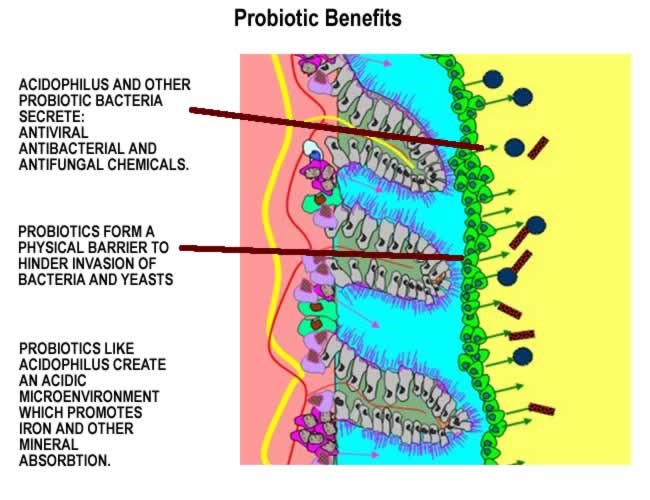
By attaching themselves to the intestinal wall, friendly bacteria keep pathogenic bacteria from gaining a foothold. In addition, they produce lactic acid and hydrogen peroxide, (which kill most disease-causing bacteria). Some yogurts and other fermented food have these cultures, but these may not be strong enough for today’s environment. This is why probiotic supplementation is so important
7. Benefits of Probiotic Bacteria
In sufficient numbers, these friendly bacteria keep disease-causing bacteria from overpopulating the intestine. Also, they improve digestion, manufacture B vitamins, and boost immune system activity. Because they boost immunity, they positively influence the overall health of the animal.
Animals get sick when their gastrointestinal tract becomes disrupted. Beneficial (friendly) microorganisms can no longer flourish in needed numbers and in the proper balance. What is the cause of this disruption in the gastrointestinal tract? Past and present use of antibiotics contributes heavily to the problem.
Perhaps you are not giving your animals antibiotics, but unless you are taking almost superhuman precautions with the food and water, they are still eating antibiotics on a regular basis. Every time your animals drink chlorinated water, eat antibiotic-laden foods, or take prescription antibiotics to fight infection, you are killing the friendly bacteria as well as the bad. And, if that is not bad enough, stress and excessive sugar consumption interfere with the good bacteria in the system.
8. Is there a difference between the probiotic bacteria found in yogurt, and in nutritional supplements?
Actually, the bacteria in yogurt, our intestine, and most natural supplements are the same types of probiotic bacteria, Lactobacillus acidophilus and Bifidobacterialongum. Because of this, these bacteria are referred in a generic sense as Probiotics. So, the term Probiotics may refer to the “good” bacteria that are present in food, or that live in our intestine, or that are part of a natural supplement.
9. Where do these probiotic bacteria come from?
As recently as the middle of the last century, bacteria found naturally in food ingredients were used to make a fermented food product. For example, the lactic acid bacteria found naturally in milk were used to make cheese. This was known as wild fermentation.
Wild fermentations are no longer used. Today, the probiotic bacteria used in food and natural supplements are harvested via a highly controlled fermentation process. This process results in high numbers of bacteria and ensures quality and purity of the bacteria.
10. Why are probiotic bacteria important for digestive health?
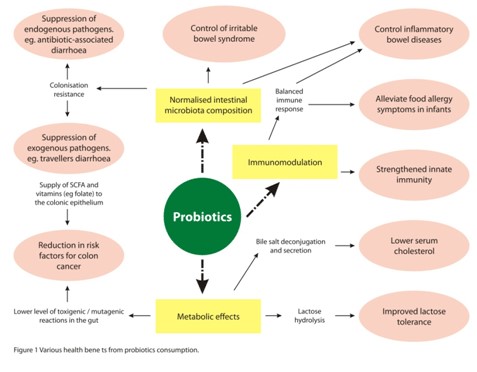
Normal microflora (the term commonly used for intestinal bacteria) is associated with good health. An imbalance in this natural microflora (when the beneficial probiotic bacteria are outnumbered by the harmful bacteria) is frequently associated with various disease states such as yeast infections and colon cancer. Eating foods or taking a nutritional supplement containing probiotic bacteria can help support and modify the composition of the large intestine microflora. Microflora of the large intestine assist digestion through fermentation (by making the intestines more inhospitable to invading bacteria species), protection against disease-causing bacteria, and stimulation of the immune system. The probiotic bacteria, Lactobacillus and Bifidobacteria, occupy a central role in the intestinal flora and provide health benefits.
11. What is the difference between digestive enzymes and probiotic bacteria? Can they be taken together?
Digestive enzymes, such as protease, amylase, and lipase, act upon food, breaking it down into simpler components that can be used by the body for energy. Without enzymes, digestion could not taken place. Therefore, the food that we eat could not be absorbed and utilized by our bodies. Probiotic bacteria help the enzymes to digest food and process waste. In essence, probiotic bacteria and enzymes work together to ensure that the digestive tract is running smoothly. When taken together, enzymes assure greater levels of digestion and absorption of your food, and probiotic bacteria aid the enzymes in digestion and keep problems in check.
12. Why are probiotic bacteria important for digestive health?
Colonies of bacteria in the intestine are called “microflora”. While a normal microflora is associated with good health, changes in intestinal health are associated with weakened immune function. An imbalance in the natural microflora is frequently associated with various disease states such as yeast infections and colon cancer.
Oral ingestion of Belta Probiotics bacteria helps support and modify the composition and metabolic activities of the large intestine microflora. Microflora of the large intestine assist digestion through fermentation (lowering the pH of the intestine, making it more acidic and inhospitable to invading species); protect against disease-causing bacteria; and stimulate the development of certain immune system components. Lactic acid bacteria have a central role in the gut flora enabling them to influence the composition of the flora for health benefits.
Belta Probiotics bacteria need to be ingested regularly for their health-promoting effects to persist.
Belta Probiotics bacteria also have been demonstrated to have anti-cancer properties.
Lactose is an important sugar that is converted to lactic acid by lactic acid bacteria. Lactose intolerance results from an inability to digest lactose, due to the failure of small intestine mucosal cells to produce lactase, an enzyme needed to digest lactose. Lactase deficiency causes people and animals to accumulate non-absorbed lactose in the gastrointestinal tract, which draws water and electrolytes into the gut and accelerates transit time, leading to bloating, cramping, diarrhoea, and malabsorption of nutrients. Lactic acid bacteria have been shown to support the breakdown of lactose, specifically by enhancing the activity of lactase (beta galactosidase), which improves lactose digestion and tolerance.
13. How often should Belta Probiotics be taken to ensure optimal support of the digestion system?
Although Belta Probiotics bacteria may survive passage through the stomach, they do not permanently colonize in the body and need to be replenished. Therefore, they need to be ingested regularly for their health-promoting effects to persist.
14. Conclusion
The body is dependent upon nutrition. Every building block, every bone cell, even the sheen of the hair and skin, is the result of the food we eat. But what good does it do to select high quality food if its nutrients are not fully absorbed?
Enzymes that assure greater levels of digestion and absorption of your food, and Belta Probiotics bacteria that keep problems in check, can make a huge difference in one’s own health and in that of animals.