Regenerative Agriculture
What Is Regenerative Agriculture?
Note: Acknowledgement is made here of the information on this page, which comes from the very interesting website of Regeneration International – Cool the Planet, Feed the World at https://regenerationinternational.org/ . I will also explain how Bio-Plant and Pro-Plant can help countries when used in regenerative farming.
1. Introduction: Regenerative Agriculture: The Climate-Smart Imperative
The reality of global climate change mandates an urgent paradigm shift in how we farm. Regenerative Agriculture is the system of farming principles that offers the solution: it is a methodology designed to not only sustain the land but to actively reverse climate change by building soil health and restoring degraded biodiversity. This approach results in profound benefits: increased yields, resilience to climate instability, and enhanced ecosystem services.
The world cannot afford to continue with industrial chemical agriculture, which is a major contributor to global warming, responsible for high levels of greenhouse gas emissions, and the decimation of fertile topsoil. Experts confirm that by switching to regenerative organic practices, we have the potential to sequester more than 100% of current annual CO2 emissions.
2. Bio-Plant and Pro-Plant: Accelerating Soil Regeneration and Climate Action
a) Bio-Plant and Pro-Plant are the microbial powerhouses that immediately accelerate the core principles of climate-smart, regenerative agriculture. They provide the essential biological catalyst for every key regenerative practice:
Carbon Drawdown: Bio-Plant is the indispensable ingredient for making rich compost, which is the single best way to restore the soil’s microbial life and enable the continuous, massive drawdown of atmospheric $CO_2$ into stable soil carbon stocks.
Restoring Soil Microbial Life: The bio-fertilisers restore the vital microbial life and fertility that chemical agriculture has destroyed. This biological revitalization is the key to increasing soil organic matter, which enhances the soil’s capacity to hold water, regulate temperature, and continuously cycle nutrients.
Integration and Versatility: Farmers can seamlessly use Bio-Plant and Pro-Plant within all climate-smart techniques—from cover cropping and companion planting to mulching—to reduce soil temperature, keep moisture in the soil, and ensure maximum biological efficiency as the land heals.
By applying Bio-Plant and Pro-Plant, farmers directly participate in the global movement to stabilize the climate, revitalize local economies, and ensure the long-term food security of humanity.
3. Organic Farming Provides a Solution to Climate Change
Regenerative, climate-smart organic agriculture could actually help save the planet from climate devastation. As the reality of global climate change continues to sink in, scientists, activists, and lawmakers all across the world are working to find new ways to fight back against greenhouse gas emissions before it is too late.
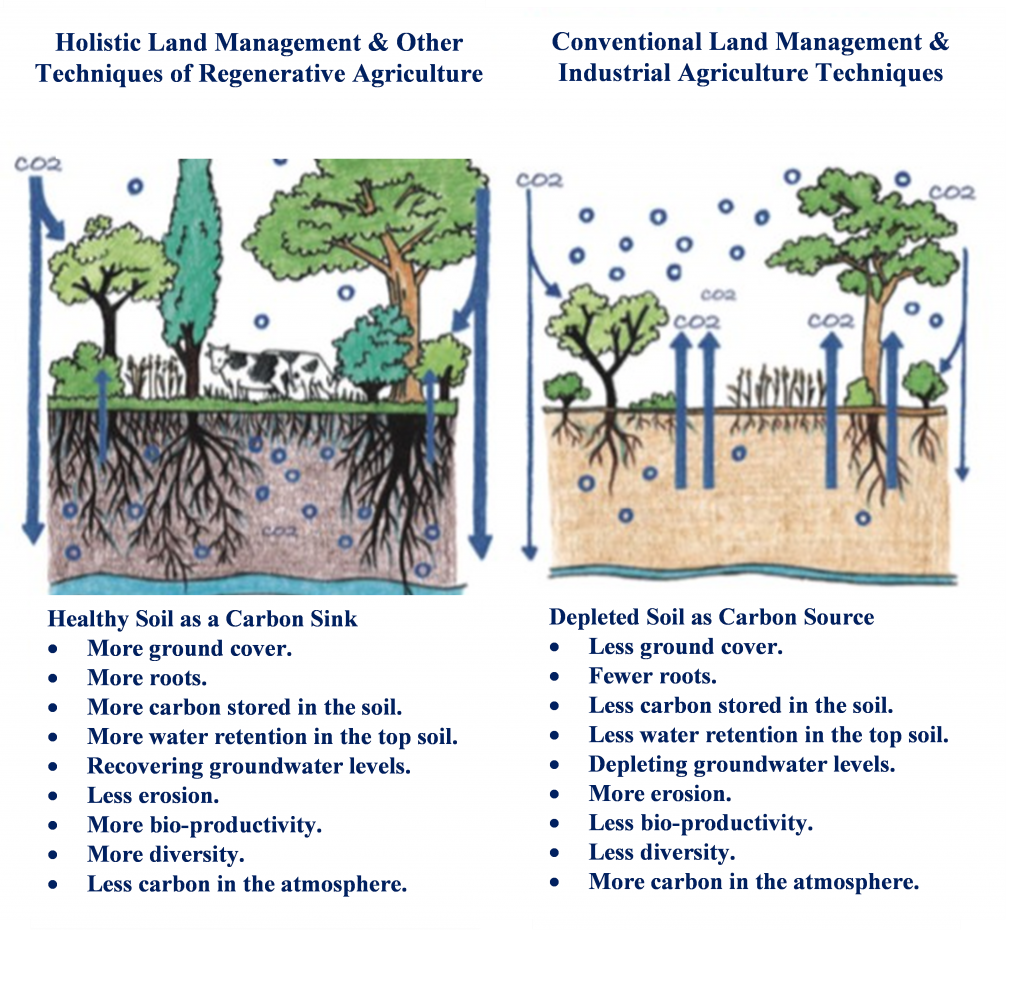
Regenerative Agriculture describes farming and grazing practices which, among other benefits, reverse climate change by rebuilding soil organic matter and by restoring degraded soil biodiversity – resulting in both carbon draw-down from the atmosphere and in improving the water cycle.
“Regenerative Agriculture is a system of farming principles and practices that increases biodiversity, enriches soils, improves watersheds, and enhances ecosystem services. It aims to capture carbon in the soil and aboveground biomass (plants), reversing current global trends of atmospheric accumulation and climate change. At the same time, it offers increased yields, resilience to climate instability, and higher health and vitality for farming and ranching communities.” www.terra-genesis.com
This video explains briefly what Climate-Smart agriculture is.
Organic farming can remove the excess Carbon Dioxide in the atmosphere by drawing it down into the soil. In contrast, industrial (chemical) agriculture has the opposite effect and contributes to climate change by sending carbon into the atmosphere. By switching to simple, regenerative, organic farming practices, mankind could sequester more than 100% of current annual CO2 emissions.
How serious is the situation regarding the level of carbon dioxide in the atmosphere? This article called UN Says Climate Genocide Is Coming. It’s Actually Worse Than That. gives a good idea of the seriousness and is based on a report called Global Warming Of 1.5 °C made in October 2018 by the Intergovernmental Panel on Climate Change of the United Nations.
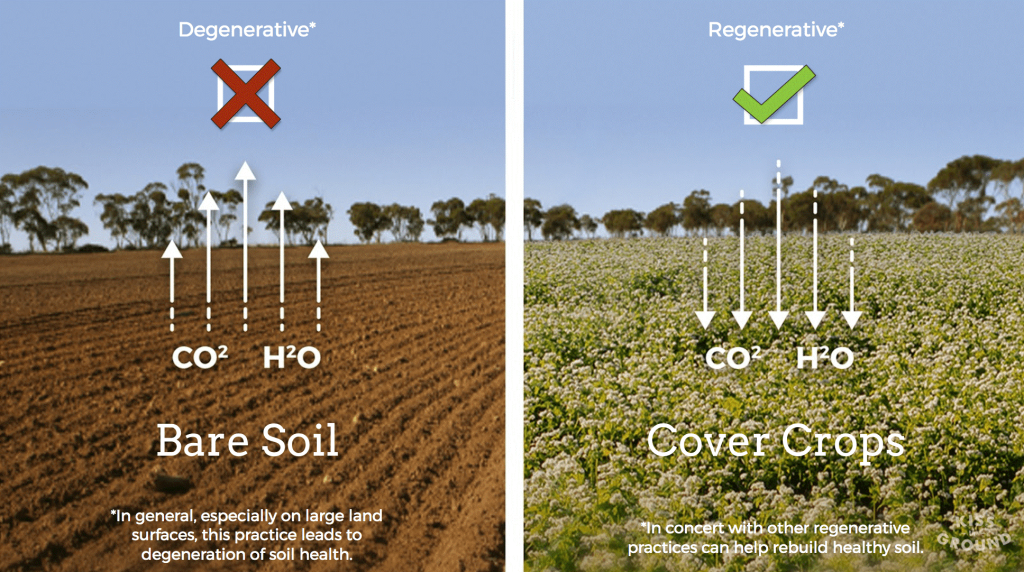
Organic farming techniques, such as restoring the soil’s microbial life with compost; growing cover crops to keep the soil covered between cash crops and to increase the soil’s organic matter; growing companion crops; and mulching the soil to keep it covered; all keep the soil covered and regenerate the soil’s microbial life and fertility. These techniques reduce the temperature of the soil and enable the soil to remove many tonnes of carbon dioxide from the atmosphere continuously.
4. How Does Bio-Plant Fit In?
Bio-Plant fits into climate-smart, regenerative agriculture because farmers can use it in all of the climate-smart practices above. It makes rich compost which restores the soil’s microbial life and thereby enables the soil to draw down more and more carbon dioxide from the atmosphere. Bio-Plant can also be used in organic farming techniques to cover the soil, to reduce the soil’s temperature, and to keep moisture in the soil. See the section below called A Global Shift to Regenerative Agriculture Can: for some of the benefits of using Bio-Plant throughout a country in climate-smart, regenerative agriculture.
5. Why is Regenerative Agriculture Needed?
Industrial chemical agriculture is a major contributor to global warming. In this video interview, The Industrial Agricultural System is Limiting Food Access and Driving Climate Change, Kirtana Chandraeskaran of Friends of the Earth International explains why the UN Conference on World Food Security in 2016 stopped short of recognizing that the industrial food sector is the greatest agricultural contributor to climate change. In short, it is because of vested interests and effective persuasion.
The loss of the world’s fertile soil and biodiversity, along with the loss of indigenous seeds and knowledge, poses a mortal threat to mankind’s future survival. According to soil scientists at the United Nations Food and Agriculture Organization, at current rates of soil destruction (i.e. decarbonization, erosion, desertification, chemical pollution), within 60 years we will not only suffer serious damage to public health due to qualitatively degraded food supply characterized by diminished nutrition and loss of essential trace minerals, but we will also literally no longer have enough arable topsoil to feed ourselves. George Monbiot: “We have sixty years of harvest left”
Without protecting and regenerating the soil on our 4 billion acres of cultivated farmland, 8 billion acres of pastureland, and 10 billion acres of forest land, it will be impossible to feed the world, keep global warming below 2 degrees Celsius, or halt the loss of biodiversity.
6. How Does Regenerative Agriculture Work?
The key to regenerative agriculture is that it not only does no harm to the land but also improves it, using technologies that regenerate and revitalize the soil and the environment. Regenerative agriculture leads to healthy soil, capable of producing high quality, nutrient-dense food while simultaneously improving, rather than degrading land, and ultimately leading to productive farms and healthy communities and economies. It is dynamic and holistic, incorporating permaculture and organic farming practices, including conservation tillage, cover crops, crop rotation, composting, mobile animal shelters, and pasture cropping, to increase food production, farmers’ income, and especially, topsoil.
7. A Sprinkle of Compost Helps Rangeland Lock Up Carbon by Carolyn Lochhead
A Sprinkle Of Compost Helps Rangeland Lock Up Carbon
The article is about a compost experiment that began in 20017 on a Marin County ranch in the USA, and which uncovered a disarmingly simple and benign way to remove carbon dioxide from the air, namely by spreading compost on degraded grazing land soil. It holds the potential to turn the vast rangeland of California and the world into a weapon against climate change.
8. A Global Shift to Regenerative Agriculture Can Do the Following
Feed the World: Small farmers already feed the world with less than a quarter of all farmland. > Read the GRAIN Report
Decrease Greenhouse Gas Emissions: A new food system could be a key driver of solutions to climate change. The current industrial food system is responsible for 44 to 57% of all global greenhouse gas emissions. > Read the GRAIN Report
Reverse Climate Change: Emissions reduction alone is simply inadequate. Luckily, the science says that tually reverse climate change by increasing soil carbon stocks. > Read the Rodale Institute Report
Improve Yields: In cases of extreme weather and climate change, yields on organic farms are significantly higher on conventional farms. > Read the Report by the UN Special Rapporteur on the Right to Food
Create Drought-Resistant Soil: The addition of organic matter to the soil increases the water-holding capacity of the soil. Regenerative organic agriculture builds soil organic matter. > Learn More
Revitalize Local Economies: Family farming represents an opportunity to boost local economies. > Read the FAO Report
Preserve Traditional Knowledge: Understanding indigenous farming systems reveals important ecological clues for the development of regenerative organic agricultural systems. > Read the Action Aid Nepal Report
Nurture Biodiversity: Biodiversity is fundamental to agricultural production and food security, as well as a valuable ingredient of environmental conservation. > Read the Report
Restore Grassland: One-third of the earth’s surface is grasslands, 70% of which have been degraded. We can restore them using holistic planned grazing. > See the Evidence
Improve Nutrition: Nutritionists now increasingly insist on the need for more diverse agro-ecosystems, in order to ensure a more diversified nutrient output of the farming systems. > Read the Report by the UN Special Rapporteur on the Right to Food
In his Keynote: The Great Challenge: Farming, Food and Climate Change at the 2014 New York Times Food for Tomorrow Conference Michael Pollan makes the point that the world has no choice but to change to organic farming. There are two faces of the climate-food system connection: how food is a key driver of climate change, responsible for between 20–30% of greenhouse gases, and then the very hopeful research on how changes in agriculture hold the potential not just to mitigate these impacts, but also to help remove carbon from the atmosphere in large quantities. From the 2014 New York Times Food for Tomorrow Conference.
9. Videos About How Regenerative Agriculture Can Reduce Climate Change
The Soil Story
Regenerative Agriculture
The Compost Story
Conversations With Great Minds – Tom Newmark – What is Regenerative Farming?
Regenerative Agriculture – A Solution to Climate Change by Ben Dobson. TEDx Hudson
What Is Regenerative Farming?
Scaling up Regenerative Organic Agriculture Can Reverse Climate Change by Andre Leu
How to Green the World’s Deserts and Reverse Climate Change
10. Regenerative Soil Practices
Soil health determines plant health, animal health, human health, ecosystem health, and even the health of the economy – we can’t say this enough!
Unfortunately, most of our farming practices damage the health of the soil over time and create serious problems for humanity. To sort out our issues, we must admit tr own human faults…publicly. Soil, we’ve wronged you by utilizing A LOT of degenerative agricultural procTorder to achieve our goal of REGENERATION, we need to take a close, comparative look at current regenerative and degenerative agricultural practices currently happening around the world. We’ll start with the truth behind those nice clean rows of tilled soil.
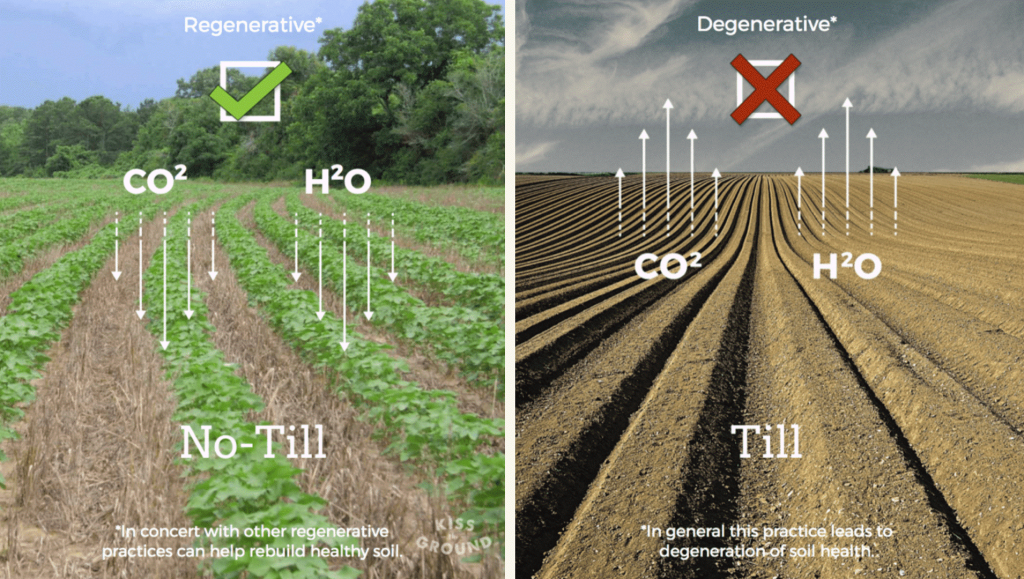
We often see tilled soil and think, “Farming looks kinda nice in those neat rows” and we may have been told that there are benefits to tilling like decreasing weeds or loosening the soil or increasing aeration. However, there are serious downsides to tillage that wreak havoc on the entire soil ecosystem, and reduce its carbon storage and its ability to regenerate itself.
11. No-Till
This means that the farmer has left the prior crop’s residue and/or the mass of plants on the soil surface, along with the roots still in the ground, and planted the new crop directly into the soil without tilling.
Protects mycorrhizal fungi and the entire soil ecosystem
Increases and protects soil aggregates
Increases water retention and infiltration
Reduces erosion
Feeds microbial communities and life in the soil (more soil biodiversity means greater biodiversity above ground)
Allows more carbon to stay in the soil through reduced
12. Tilling
Is the process of turning over and breaking up the soil.
Kills and destroys critical mycorrhizal fungal networks. Fungi are responsible for producing acids and enzymes that make nutrients available to plants, creating carbon-based soil aggregates that hold 20x their weight in water, decomposing cellulose and lignin, allowing plants to share resources, and helping plants fight off disease and pests. They are a key component of a regenerative healthy soil ecosystem.
Pulverizes soil aggregates, which increases soil erosion from wind and water, and also decreases the rate at which that water can be absorbed into the soil.
Brings stored soil carbon to the surface to be oxidized.
Greatly disturbs soil organisms’ habitat
Increases evaporation rates