Bio-Utility - Wastewater Treatment Research Pilot Proposal for the Dhaka, Bangladesh Plant
Field Evaluation of a Bacillus-Based Microbial Product (Bio-Utility) for Improving Lagoon Treatment of Municipal Sewage in Dhaka, Bangladesh
To: The Managing Director, Dhaka Water Supply and Sewerage Authority (Dhaka WASA), WASA Bhaban, 98 Kazi Nazrul Islam Avenue, Kawran Bazar, Dhaka 1215
Subject: Proposal for pilot trial of Bio-Utility in one sewage lagoon
Dear Sir or Madam,
1. Summary
We propose a 12-week controlled field trial to measure how far Bio-Utility, a liquid microbial product based on Bacillus, reduces odour and sludge accumulation in an existing sewage lagoon, with BOD₅, COD and ammonia as secondary outcomes. Plant staff and neighbours notice odour and sludge first, and the volume of sludge determines how often the lagoon must be desludged. Peer-reviewed studies of Bacillus, together with the manufacturer’s own results, suggest that substantial reductions in odour, sludge and BOD₅ are possible (Section 4). Whether such reductions are achieved on Dhaka sewage is the question the trial answers. To answer it, one treated lagoon is compared with an untreated control lagoon, and success is judged against thresholds agreed in writing before dosing begins.
The trial requires no new infrastructure, no change to the plant’s process and no commitment to purchase.
2. Background and problem statement
2.1 Lagoon treatment of sewage in Dhaka
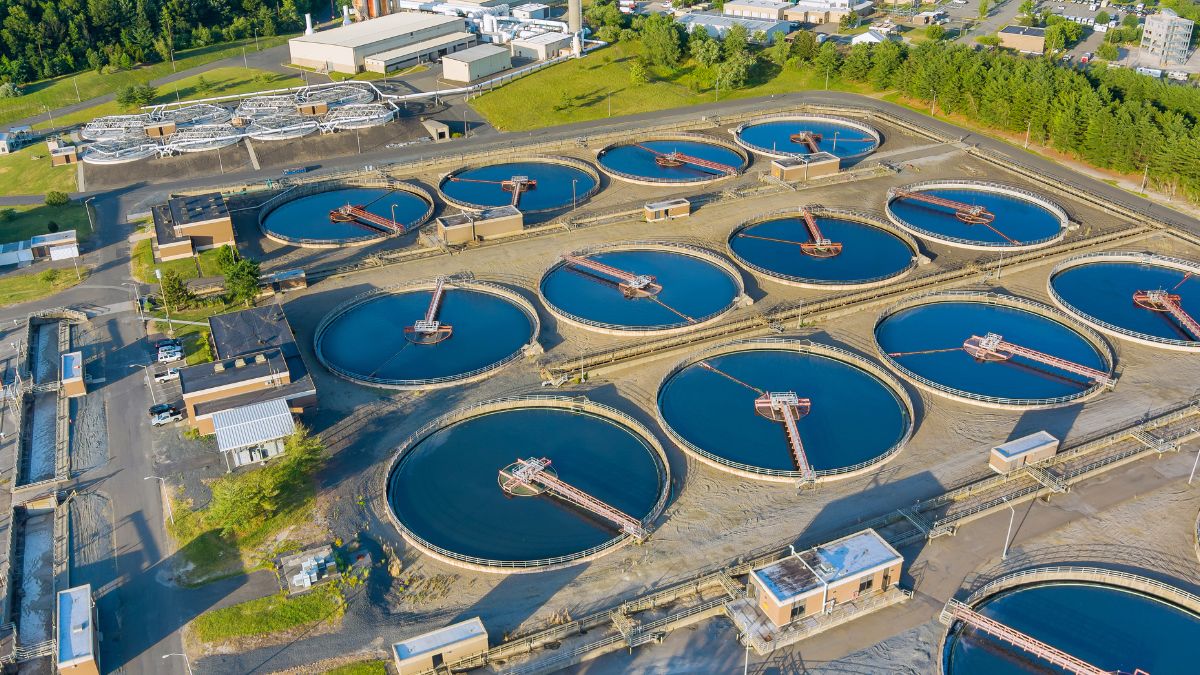
Pagla Sewage Treatment Plant, Dhaka’s long-established sewage plant, treats sewage by grit removal, primary sedimentation, facultative lagoons, chlorination and sludge lagoons, with a design flow of 120,000 m³/day [1, 2]. Published evaluations describe three recurring problems, listed here in the order in which plant staff and the public notice them:
-
A study of the plant recorded “an obnoxious and foul smell even at the fag end of the plant” [2].
-
Sludge and low oxygen. Anoxia was recorded three times in 10 months in lagoon no. 1 [3], and the sludge lagoons are a known operational problem [1].
-
Organic overload and non-compliance. An evaluation published in 2020 measured influent BOD₅ of 832 mg/L and effluent BOD₅ of 497.5 mg/L, against design values of 120 mg/L and 50 mg/L [1].
Dhaka WASA is reconstructing and expanding Pagla as a 200 MLD plant under the Dhaka Sanitation Improvement Project [7]. The trial is therefore offered for any lagoon that Dhaka WASA continues to operate, at Pagla or elsewhere, and its results would also apply to lagoon and pond systems run by other authorities.
2.2 Discharge standards
Effluent discharged to surface and inland waters must meet Schedule 3 of the Environment Conservation Rules, 2023 [5], which replaced the 1997 Rules from 5 March 2023. The limits, as reproduced in a 2025 Environmental Impact Assessment filed with the Department of Environment [6], are:
No. |
Parameter |
Unit |
Limit |
1 |
BOD₅ |
mg/L |
30 |
2 |
Nitrate |
mg/L |
50 |
3 |
Phosphate |
mg/L |
15 |
4 |
Suspended solids |
mg/L |
100 |
5 |
Temperature |
°C |
30 |
6 |
Total coliform |
CFU/100 mL |
1,000 |
7 |
pH |
– |
6–9 |
8 |
COD |
mg/L |
150 |
9 |
Oil and grease |
mg/L |
10 |
Sewage must be chlorinated before final discharge, with residual chlorine not exceeding 0.2 mg/L [6].
The gap between measured effluent quality [1] and these limits is large, and we do not claim that microbial dosing alone can close it. The trial therefore leads with odour and sludge, the two outcomes that staff and neighbours can observe directly, and measures any improvement in BOD₅ and COD as a secondary benefit.
3. The Product
Bio-Utility is a liquid microbial product made in Thailand by fermenting sugarcane molasses with cultures of Bacillus, Nitrosomonas, Nitrobacter and Pseudomonas [8, 9]. Its guaranteed minimum total plate count is 1.5 × 10⁶ CFU/mL. The Bacillus in the product are present largely as endospores. Endospores resist harsh conditions [15] and germinate and multiply once they reach nutrient-rich wastewater, so the active population may increase after dosing as spores germinate. The supplier describes it as natural, chemical-free and non-pathogenic, containing both aerobic and anaerobic organisms [9].
Safety basis. The principal organism is a Bacillus species that holds Qualified Presumption of Safety (QPS) status with the European Food Safety Authority, with the qualification that each strain must be shown to lack toxigenic activity [10]. Bacillus is also already the dominant Gram-positive genus in the Pagla plant’s own microbial community [4], so the trial adds an organism type that is native to the system rather than a foreign one.
How it is expected to work. Bacillus secretes enzymes that break complex organic matter into soluble compounds, some strains remove ammonium under fully aerobic conditions [13, 14], and spore-forming Bacillus survive the low-oxygen conditions of sludge layers [15]. Annex A gives more detail.
4. Review of the evidence
4.1 Peer-reviewed studies
The table summarises peer-reviewed field, pilot and laboratory studies of Bacillus in wastewater, sludge and organic waste. Where a study reports a range, the conservative end is shown. None of the studies tested Bio-Utility itself.
Study |
Setting |
Reported effect (conservative end) |
Relevance and limits |
El-Zanfaly et al., 2010 [22] |
Field septic tanks treating real domestic sewage, Upper Egypt (warm climate); five Bacillus species added, re-dosed every 30–45 days |
Effluent BOD₅ 47–52% lower, TSS 41–54% lower and COD 24–52% lower than in tanks without additive*; sludge volume reduction reported |
Closest match: real domestic sewage, field scale, warm climate, Bacillus only |
Qi et al., 2025 [23] |
Anaerobic wastewater, strain screening |
H₂S emission 42.67% lower with Bacillus |
Direct measurement of H₂S from wastewater |
Li et al., 2022 [24] |
Waste activated sludge from a 90,000 m³/day plant, bioaugmentation with sludge-derived bacteria including a Bacillus strain |
Total suspended solids of sludge 21.2–26.7% lower |
Laboratory scale; best strain was not Bacillus |
Hwang et al., 2023 [11] |
Swine manure, 400 L reactors, commercial Bacillus product, surface spraying |
COD and volatile solids 3% lower than control; sulphur-compound odour emissions 20% lower; ammonia emissions 40% lower |
Real organic waste with a control; manure is stronger than sewage |
Ismail & Jaeel, 2013 [12] |
Actual domestic wastewater, continuous flow, >45 days |
COD removal 90% with Bacillus vs 84% with activated sludge inoculum; residual COD 37.5% lower (10% vs 16% of influent) |
Real domestic sewage; reactor is a microbial fuel cell, not a lagoon |
Yang et al., 2011 [13] |
Bacillus strain A1, laboratory |
20.4% of ammonium-N removed as gas in 120 h |
Single strain in laboratory medium |
Yang et al., 2017 [14] |
Bacillus sp. K5, sequencing batch reactor, synthetic municipal wastewater |
COD 98% and NH₄⁺-N 95% removal by the whole system |
Shows the upper potential of a Bacillus-augmented system; synthetic wastewater |
Seo et al., 2017 [15] |
Pilot-scale aerobic sludge digestion dominated by Bacillus |
90.1% of sludge organic matter removed |
Supports the sludge mechanism; dedicated digestion process, not lagoon dosing |
* Calculated from the removal percentages reported in [22], pairing the lowest removal with additive against the highest removal without additive. For example, BOD₅ removal of at least 93% with additive versus at most 85.5% without leaves 7% versus 14.5% of the influent BOD₅ in the effluent, i.e. 52% less.
Synthesis. The most relevant study, a field trial of Bacillus in septic tanks treating real domestic sewage in a warm climate, shows effluent BOD₅ about half that of untreated tanks [22]. Bacillus reduced H₂S emission from wastewater by about 43% [23], and bioaugmentation reduced sludge solids by 21–27% at laboratory scale [24] and sludge organic matter by 90% in a Bacillus-dominated pilot [15]. Taken together with the manufacturer’s results (Section 4.2), these studies suggest that substantial improvements in odour, sludge and BOD₅ are possible; the estimated ranges are given in Section 7. A review of bioaugmentation cautions that results at full scale can be lower than in experimental systems [16], which is why we propose a controlled trial before any purchase.
4.2 Results reported by the manufacturer
The manufacturer’s technical documentation reports the following results from earlier applications of Bio-Utility [20]. These figures have not been published in peer-reviewed literature or independently verified, and they come from wastewater types other than municipal sewage. They are given for context. Together with the peer-reviewed results, they inform the expected performance range in Section 7.
Application reported [20] |
Reported result |
Wastewater type |
Various treatment systems |
BOD reduction 40–90%; COD reduction 30–80% |
Mixed; range depends on the system |
Tannery effluent |
Up to 88% COD and 92% TSS removal |
Industrial |
Treatment lagoons |
Average 56% sludge reduction |
Lagoon systems |
Swine wastewater, combined with polyaluminium chloride |
Up to 92% COD, 91% ammonia and 93% phosphorus removal |
Livestock |
Shrimp farm effluent, Vietnam |
In use; listed among the product’s applications [8] |
Aquaculture |
The manufacturer’s figures lie within or above the range supported by the field studies above [22, 23]. The trial is designed to establish which range applies to Dhaka sewage.
5. Objectives and hypotheses
Primary objective: to measure the effect of Bio-Utility dosing on odour (H₂S) and sludge accumulation in a full-scale sewage lagoon.
Secondary objectives: to measure the effect on effluent BOD₅, COD, ammonia-N and TSS; to confirm that disinfection performance and effluent coliform compliance are unaffected; and to establish a dose and cost per cubic metre for scale-up, including the saving in desludging cost (Section 10).
Hypothesis (H₁): during the treatment period, H₂S and the organic mass of bottom sludge in the treated lagoon differ from those in the control lagoon, after allowing for baseline differences. Null hypothesis (H₀): no difference between treated and control lagoons beyond baseline variation.
6. Methods
6.1 Design
A before–after/control–impact design: two lagoons of similar size, inflow and condition are selected with Dhaka WASA staff, one treated and one untreated control. Both are monitored during a baseline period and a treatment period, so that seasonal changes in temperature, rainfall and inflow affect both equally. If no suitable control lagoon exists, the treated lagoon is compared with its own baseline, and this limitation is stated in the report.
6.2 Site
Lagoon dimensions are confirmed at the site survey. For planning, this proposal uses a reference lagoon of 120 m × 85 m × 2 m (20,400 m³) [9]. Existing aerators continue to operate and disinfection is not changed.
6.3 Duration
Twelve weeks: two weeks of baseline, eight weeks of treatment, and two weeks of final measurement and reporting. The supplier’s guidance indicates a full treatment cycle of about 30–35 days, or about 21 days with aeration [9], so the eight-week treatment period covers at least two cycles.
6.4 Dosing
The product is diluted with water and sprayed over the lagoon surface, or poured in at the inlet if spraying is impractical, and distributed by the aerators [9]. Surface spraying is preferred, as it gave the larger odour and ammonia reductions in [11]. Doses are per volume of water in the lagoon and are repeated every two weeks (weeks 3, 5, 7 and 9) [9].
Water condition [9] |
Dose per application |
Reference lagoon (20,400 m³) |
Household-strength wastewater |
1 L per 500–1,000 m³ |
about 20–41 L |
Mildly smelly wastewater |
1 L per 300–500 m³ |
about 41–68 L |
Putrid, foul-smelling wastewater |
1 L per 100–300 m³ |
about 68–204 L |
Because of the influent strength reported at Pagla [1] and the odour recorded there [2], the third level is the expected starting dose. Once odour has cleared, the dose is reduced to the maintenance rate of 1 L per 500 m³ every two weeks [9].
6.5 pH, oxygen and temperature
The supplier’s cultures work best near pH 7 [9]. pH values of 7.2–7.9 and temperatures of 26.9–27.5 °C have been measured at Pagla [4], so no pH adjustment is expected. Lime is added only if measured pH falls below 6.5, and never on assumption. Dissolved oxygen is measured at each sampling. If it is persistently low, aeration is increased within the existing equipment. Where supplementary aeration is needed, partial-mix aerated lagoons typically require 1–2 W per m³ of lagoon volume [17], and sizing is confirmed by a process engineer.
6.6 Sampling and analysis
Composite samples are taken at the inlet and outlet of both lagoons twice weekly, giving 4 baseline and 16 treatment samples per point. Analyses follow Standard Methods for the Examination of Water and Wastewater [18] and are carried out by the plant laboratory or an agreed independent laboratory. Because sludge depth changes by only a few centimetres over 12 weeks, the sludge outcome is measured as the organic mass of the bottom sludge, which bacteria reduce within days [24]. Sludge cores are taken at a fixed grid of at least nine points per lagoon in weeks 2, 6, 10 and 12 and analysed for total and volatile solids, and the volatile solids per square metre of lagoon bed are calculated at each point. Sludge depth is also measured with a sludge judge at the same points and recorded for the longer-term accumulation rate. Hydrogen sulphide is measured at fixed points on the lagoon bank with a portable H₂S meter, alongside operator odour scoring and a log of complaints.
6.7 Statistical analysis
For each parameter, the treatment-period difference between treated and control lagoons is compared with the baseline difference. Differences are tested with a two-sided Mann–Whitney U test at α = 0.05, which does not assume normal distribution. Effect sizes are reported as percentage change with 95% confidence intervals. All raw data are shared with Dhaka WASA.
7. Success criteria
Each threshold is set at the conservative end of the most relevant field or wastewater study for that parameter (Section 4.1). The expected range combines the peer-reviewed results with the manufacturer’s results (Section 4.2). A difference must also be statistically significant (Section 6.7). Thresholds are confirmed in writing before dosing begins. The expected ranges are estimates from the literature and are not performance guarantees.
Parameter |
Frequency |
Success threshold (vs control) |
Expected range |
Basis |
Primary |
|
|
|
|
Odour (H₂S) |
Twice weekly |
≥30% lower |
About 40–70% lower |
Below the 42.67% reduction in H₂S from wastewater [23] and at the upper end of the 20–30% reduction in manure [11] |
Bottom sludge: volatile solids per m² (depth recorded) |
Weeks 2, 6, 10, 12 |
≥20% lower change from baseline |
About 40–70% lower |
21.2–26.7% lower sludge solids within 120 h [24]; sludge reduction in Bacillus-seeded septic tanks [22]; 90.1% [15]; 56% average in lagoons [20] |
Secondary |
|
|
|
|
BOD₅ |
Twice weekly |
≥40% lower |
About 40–70% lower |
47–52% lower effluent BOD₅ in real domestic sewage [22]; 40–90% [20] |
COD |
Twice weekly |
≥20% lower |
About 25–50% lower |
24–52% lower [22]; 37.5% lower residual COD [12] |
Ammonia-N |
Twice weekly |
≥20% lower |
About 20–40% lower |
20.4% [13]; 40% [11] |
TSS |
Twice weekly |
≥40% lower |
About 40–55% lower |
41–54% lower [22] |
Process and safety |
|
|
|
|
DO, pH, temperature |
Each sampling |
Recorded |
– |
Process conditions |
Effluent coliforms, chlorine residual |
Weekly |
Within ECR 2023 limits |
– |
Safety check [5, 6] |
The trial is judged successful if both primary outcomes meet their thresholds, or one primary outcome and at least two secondary outcomes do, and the safety check is met. Results below the thresholds do not by themselves determine the product’s suitability at other sites, doses or treatment periods.
8. Responsibilities
Artemis & Angel supplies Bio-Utility, provides the dosing protocol and training for plant staff, makes up to two site visits during the trial, and prepares a final report with all raw data. Travel costs and the scope of any further technical support are set out in the pilot agreement.
Dhaka WASA provides access to the treated and control lagoons, operates the existing aerators, carries out or arranges sampling and laboratory analysis, and shares flow and operating records.
9. Timeline
Weeks |
Activity |
1–2 |
Site survey, selection of treated and control lagoons, baseline sampling including sludge cores in week 2, written agreement of thresholds |
3–10 |
Dosing in weeks 3, 5, 7 and 9; twice-weekly sampling; sludge cores in weeks 6 and 10 |
11–12 |
Final sampling and sludge cores, statistical analysis, joint review, written report |
10. Expected cost and benefit at full scale
The main financial benefit is a lower desludging cost. Lagoon sludge must be removed periodically, and desludging is recommended once sludge fills about 30% of a pond’s volume, typically about every 15 years for primary facultative ponds in France [25]. Desludging in developing regions has been reported to cost US$29–156 per m³ of sludge at 10% solids [26] (€20–83 per m³, mean €38, in France [25]). Sludge accumulates at about 0.021–0.08 m³ per person per year in primary ponds [25, 27], and heavily loaded ponds such as those at Pagla [1] can fill faster than this.
For the reference lagoon (20,400 m³), desludging at 30% filling removes about 6,120 m³ of sludge, costing about US$177,000–955,000 per event. The table compares the annual saving from slower sludge accumulation with the annual product cost at the maintenance dose (1 L per 500 m³ every two weeks [9], about 1,060 L per year, or about US$15,900 per year at US$15 per litre).
Sludge reduction |
Annual saving, desludging every 15 years [25] |
Annual saving, desludging every 5 years (heavily loaded pond, illustrative) |
None (annual desludging cost) |
US$11,800–63,600 |
US$35,500–190,900 |
20% (success threshold) |
US$2,400–12,700 |
US$7,100–38,200 |
40% (lower expected) |
US$4,700–25,500 |
US$14,200–76,400 |
70% (upper expected) |
US$8,300–44,600 |
US$24,800–133,700 |
Within the expected 40–70% range, the sludge saving alone covers the product cost if desludging is frequent or if desludging costs are in the middle or upper part of the reported range. The break-even sludge reduction is about 25% at the upper cost with 15-year desludging, and about 8–45% with 5-year desludging. The reduction in odour, which affects staff and neighbouring communities, and any improvement in effluent quality are additional benefits not counted here. The trial measures the reduction in sludge organic mass. With continued dosing and sludge-depth monitoring for 6–12 months after the trial, the accumulation rate can then be measured directly, and this estimate can be replaced with site data.
11. Budget and commercial terms
Product for the pilot. Four applications to the reference lagoon require about 80–820 litres, depending on its condition (Section 6.4). At the reference price of US$15 per litre CIF Chittagong this is about US$1,200–12,300, and about US$4,100–12,300 at the expected starting dose. Pilot pricing is subject to agreement.
Laboratory analysis is carried out by Dhaka WASA or an agreed laboratory. If an external laboratory is used, its cost is agreed before the start.
After the pilot. If the agreed criteria are met, Artemis & Angel would be pleased to quote for full-scale use based on the dose and results measured in the trial. Supplier credit in the form of product can be discussed, for example an initial deposit with the balance by a 12-month letter of credit, and longer-term pricing can also be discussed. All terms are subject to contract. The pilot creates no commitment to purchase.
12. Safety and regulatory status
-
The product is supplied as natural and non-pathogenic [9], and its principal organism belongs to a QPS-listed Bacillus species [10].
-
A certificate of analysis from an ISO/IEC 17025-accredited laboratory, such as Central Laboratory (Thailand) Co., Ltd. [21], and a safety data sheet can be provided on request. The scope of testing, for example species identification and pathogen screening, is agreed with Dhaka WASA in the pilot agreement.
-
Genetically modified organisms require approval under the Bangladesh Biosafety Rules, 2012 [19]. Bio-Utility is made from naturally occurring cultures [8], so we expect it to be imported under ordinary import procedures. Artemis & Angel will work with Dhaka WASA to identify and apply for any import permit or Department of Environment clearance that the authorities require.
-
Disinfection and all other treatment stages continue unchanged, and effluent coliforms and chlorine residual are monitored throughout.
13. Limitations
-
Results depend on oxygen supply, temperature, organic load and retention time, and may differ between lagoons and seasons.
-
A 12-week trial measures short-term effects. The sludge outcome is therefore based on the organic mass of the sludge, and a reduction in the long-term accumulation rate can be confirmed only by monitoring sludge depth for 6–12 months.
-
Bio-Utility is a biological treatment. It does not replace disinfection or the plant’s physical treatment stages, and Dhaka WASA remains responsible for meeting its discharge requirements.
14. Next steps
We propose an initial meeting and site visit. Beforehand, we would be grateful for: lagoon layout and dimensions; current flow data; recent BOD₅, COD, TSS, ammonia and phosphorus results; pH, temperature and dissolved oxygen records; and sludge survey records. We would then agree the lagoons, thresholds and start date together.
Thank you for considering this proposal.
Yours faithfully,
Artemis & Angel Co. Ltd.
Annex A: Mechanisms of Action
Aerobic degradation. Where dissolved oxygen is present, bacteria use organic matter as food and convert it mainly to carbon dioxide, water and new cells. Oxygen comes from aerators and, in facultative lagoons, from algae near the surface.
Enzymes. Bacillus secretes hydrolytic enzymes such as proteases, amylases and cellulases, which break complex organic matter into soluble compounds that the wider microbial community can take up.
Nitrogen removal. Some Bacillus strains carry out heterotrophic nitrification and aerobic denitrification, converting ammonium to nitrogen gas in the presence of oxygen [13, 14]. The Nitrosomonas and Nitrobacter in the product carry out conventional nitrification where conditions allow [8].
Sludge. Spore-forming Bacillus survive in harsh, low-oxygen conditions and may use dead microbial cells for growth, which is the proposed basis for sludge reduction [15]. Bacteria added to septic tanks treating domestic sewage reduce retained organic matter to soluble compounds and gases, which further reduces sludge volume, particularly in warm climates [22]. Accumulated sludge releases soluble organics and ammonia back into the water, so slower accumulation also helps effluent quality [17].
Odour. Hydrogen sulphide and other foul odours arise under septic, low-oxygen conditions. An active aerobic population and adequate oxygen reduce their source [9, 11].
Multiple ponds. Where several ponds are available in series, water can be moved to the next pond about every 30–35 days and treatment continued [9].
Annex B: Product Data
Items |
Details |
Product name |
Bio-Utility |
Origin |
Thailand |
Form |
Concentrated brown-black liquid |
Process |
Fermentation of sugarcane molasses with bacterial cultures [8] |
Organisms |
Bacillus (principal organism), Nitrosomonas, Nitrobacter, Pseudomonas [8, 9] |
Minimum plate count |
1.5 × 10⁶ CFU/mL guaranteed (total plate count, pour-plate and spread-plate methods) |
Description |
Natural, chemical-free, non-pathogenic microbial liquid with aerobic and anaerobic organisms [9] |
Recommended pH |
Near neutral (about pH 7); cultures tolerate down to pH 4 [8, 9] |
Packaging |
1-litre bottles; 20-litre containers; 200-litre drums |
Shipping |
80 × 200-litre drums per 20-foot container = 16,000 litres, about 20,800 kg |
Documents available on request |
Certificate of analysis from an ISO/IEC 17025-accredited laboratory [21]; safety data sheet |