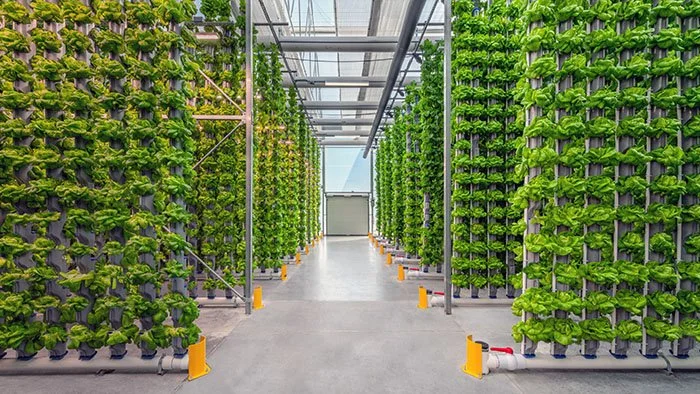
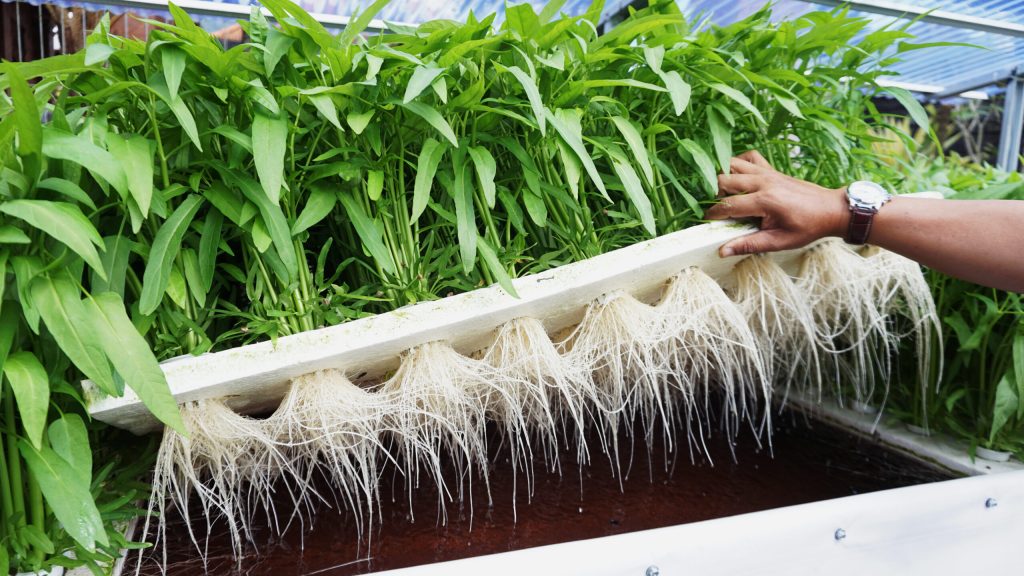
For decades, the hydroponic industry has been built on a single, shaky foundation: the belief that plants are machines designed to consume mineral salts. If you walk into any professional greenhouse or hobbyist setup, you are almost guaranteed to see a regimen of A+B nutrient solutions—sterile, synthetic, and chemically derived. The logic is that because the plant is separated from the soil, it must be “force-fed” via a chemical delivery system.
But this approach is fundamentally flawed. By treating plants like lab experiments in a test tube, we have sacrificed flavour, nutritional density, and plant resilience. We have created a system that is prone to root rot, algae blooms, and disease, forcing farmers to reach for even more chemicals—fungicides, algaecides, and sterile flushing agents—to keep the system running.
It is time to dispel the myth that hydroponics requires chemicals. It is time to embrace Biological Hydroponics.
The Flaw of Chemical Solutions
Synthetic nutrient solutions are essentially “fast food” for plants. They provide readily available nitrogen, phosphorus, and potassium, but they lack the biological complexity that plants evolved with over millions of years. When you feed a plant only mineral salts, you bypass the rhizosphere—the microbial neighbourhood that normally protects the roots.
In a sterile hydroponic system, there is no “immune system.” If a pathogen enters your water reservoir, it spreads instantly because there is no beneficial microbial workforce to defend the roots. This is why chemical hydroponic growers are constantly battling Pythium, Fusarium, and other root-zone diseases.
 admin
admin