Microbial Power: Meet the Workers Regenerating Your Soil
admin
April 30, 2026
Microbial Power: Meet the Workers Regenerating Your Soil
If you look at a handful of healthy soil under a microscope, you aren’t just seeing dirt. You are seeing a bustling, hyper-efficient, and highly complex city. It is a metropolis of bacteria, fungi, protozoa, and nematodes—an invisible workforce that has been managing the Earth’s fertility for millions of years.
In conventional agriculture, we have spent decades trying to evict these workers. Through the use of harsh synthetic fertilizers, fungicides, and pesticides, we have systematically sterilized our fields. We have assumed that we could replace this complex biological workforce with a simple chemical formula of NPK. We were wrong.
“Microbial biotechnology” is the science of rehiring that workforce. It is the practice of reintroducing, managing, and empowering the beneficial microbes that turn raw organic matter and minerals into the fuel that plants need to grow.
The Invisible Workforce: What Do They Actually Do?
To understand why Bio-Plant is so effective, you have to understand what your soil is supposed to be doing naturally. Beneficial microbes are not just “hanging out” in the soil; they are working 24/7. Here is their job description:
Nitrogen Fixation (The Air-to-Fertilizer Factory)
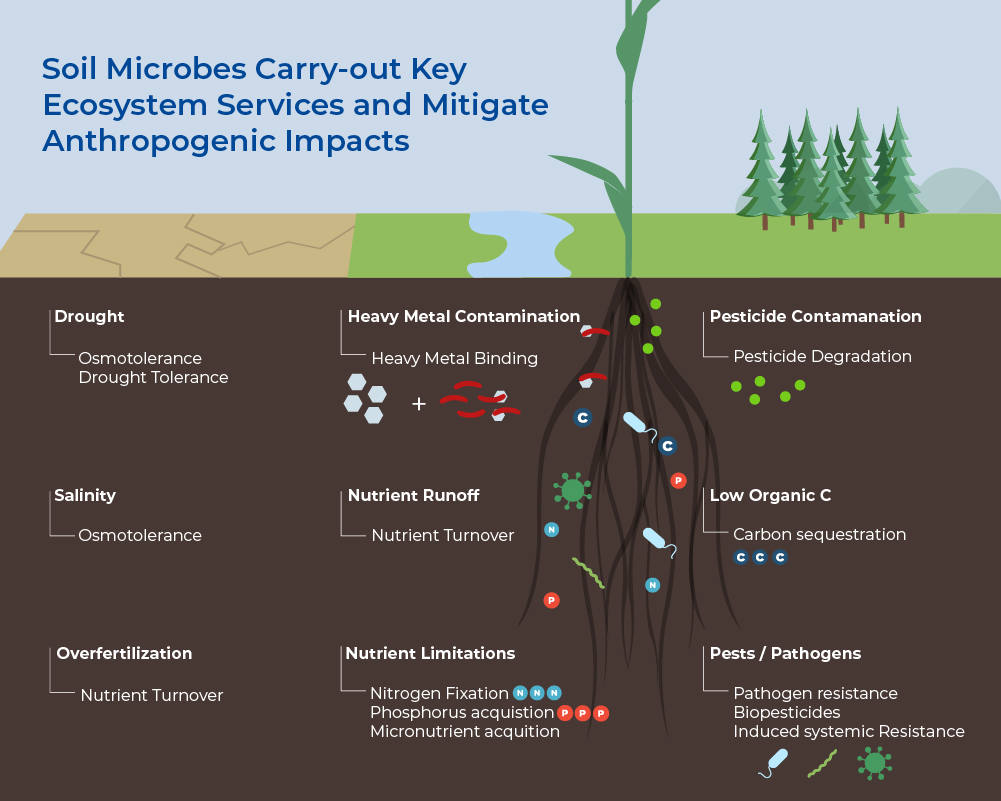
Nitrogen is the most abundant element in our atmosphere—about 78% of the air we breathe is nitrogen. However, plants cannot pull nitrogen out of the air. They need it in a specific form (like ammonium or nitrate) to absorb it through their roots. In chemical farming, we provide this nitrogen synthetically, which is energy-intensive to produce and prone to leaching into groundwater.
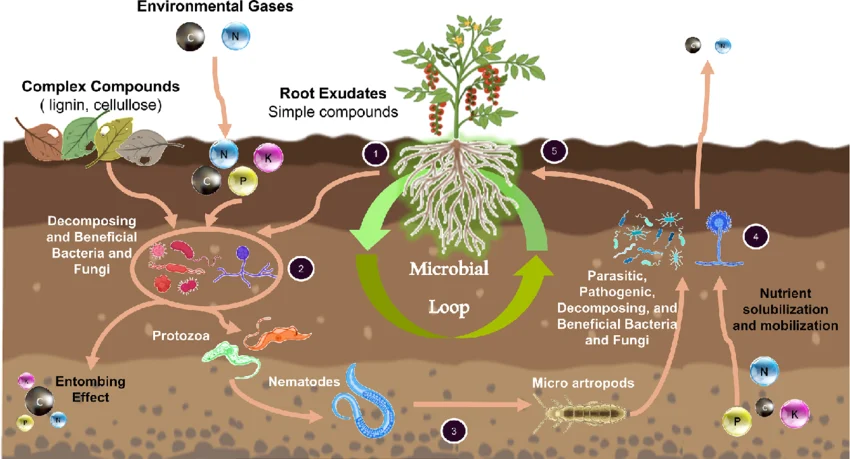
Beneficial bacteria, such as Azotobacter and Rhizobium species (often found in high-quality microbial inoculants), have the ability to “fix” nitrogen. They take the gas from the air and convert it into a plant-available form. It is the most efficient, free fertilizer delivery system on the planet.
Phosphorus Solubilization (Unlocking the Vault)
Phosphorus is essential for root development and fruit set, but it is notorious for being “locked” in the soil. Even if you have high levels of phosphorus in your dirt, it is often chemically bound to calcium or iron, making it invisible to the plant.
Beneficial fungi and bacteria act as the keys to this vault. They secrete organic acids that dissolve these bonds, releasing the phosphorus and making it soluble so the plant can drink it up. Without these microbes, your plants are starving in the middle of a feast.
Degrading Organic Matter (The Digestive System)
Think of your soil as a stomach. If you feed the stomach raw materials—like compost, mulch, or crop residue—it needs a digestive system to break it down into nutrients. Microbes are that digestive system. They feed on organic matter, breaking it down into humus. Humus is the “black gold” of soil; it holds water, stores nutrients, and creates the structure that allows roots to breathe.
The Artemis Angle: Why Bio-Plant is Different
You might have seen other “effective microorganism” (EM) products or compost teas on the market. While the intention behind them is good, many fall short because they lack the stability, diversity, and synergy required for professional-scale agriculture.
Bio-Plant is the result of deep research into microbial synergy. We didn’t just throw a random collection of microbes into a bottle. We developed a highly specific, stable, and powerful consortium of beneficial agents.
Stability: Many microbial products die on the shelf before they ever reach your farm. Bio-Plant’s formulation ensures that the microbes remain viable, dormant, and ready to activate the moment they hit your soil.
Synergy: Our microbes are selected to work as a team. Some specialize in nitrogen fixation; others focus on phosphorus solubilization; others are masters of decomposing cellulose. They support one another, creating a thriving community rather than a collection of competitors.
Environmental Resilience: We have engineered our formulation to handle the harsh conditions of real-world farming—high heat, variable pH levels, and even drought stress.
The Transition: From Chemistry to Biology
Understanding microbial power changes your approach to farming. You stop seeing your fertilizer as a “product” and start seeing it as an “investment.”
When you apply Bio-Plant, you aren’t just adding nutrients; you are adding life. You are seeding your soil with the workers that will continue to provide value for years to come. Unlike synthetic fertilizer, which is used up by the plant or washed away by the rain within weeks, a thriving microbial population grows, reproduces, and colonizes. It becomes a permanent part of your farm’s infrastructure.
If you are serious about yield, quality, and long-term profitability, it is time to stop trying to cheat biology. It is time to harness it. Harness the power of the invisible workforce, and watch how your crops respond to a truly nourished, living soil.
 admin
admin