The Regenerative Revolution: What It Is and Why Countries Need It Now

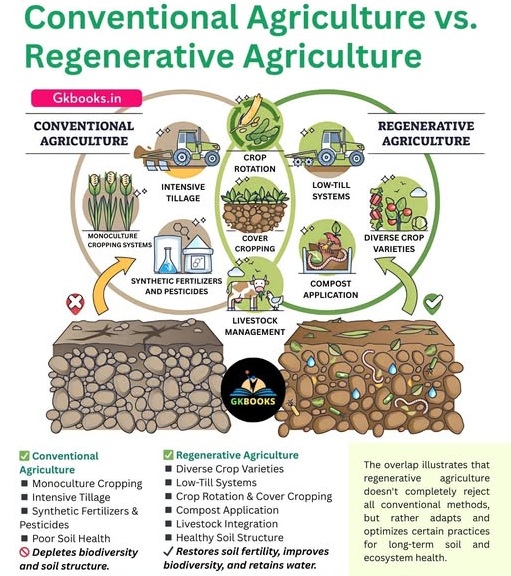
For the past several decades, the global agricultural model has operated on a philosophy of “extraction.” We treat soil as a sterile substrate—a dead, physical medium whose only purpose is to anchor the plant while we artificially pump it full of chemical inputs to force growth. We call this “conventional farming,” but if we are being honest, it is a depletion strategy. We are essentially mining the soil of its life, its carbon, and its structural integrity. Every harvest removes nutrients, and every heavy-handed application of synthetic fertilizer, pesticide, and herbicide further degrades the biological architecture that makes soil fertile in the first place.
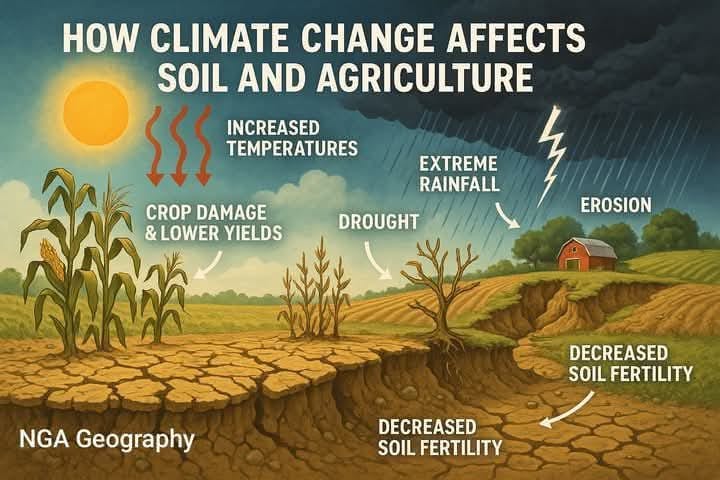
In Thailand, a country blessed with immense biodiversity and a rich agricultural history, this model is reaching a dangerous breaking point. Soil fertility is dropping across the country, input costs for synthetic fertilizers are spiralling, and the environmental cost of chemical runoff into our waterways is becoming impossible to ignore.
The Shift: Moving Beyond Sustainability
The term “sustainability” has been used to death, often without much substance. Sustainability implies maintaining the status quo—keeping things exactly as they are. But given the current state of soil degradation, maintaining the status quo is a losing game. We don’t just need to sustain our soil; we need to regenerate it.
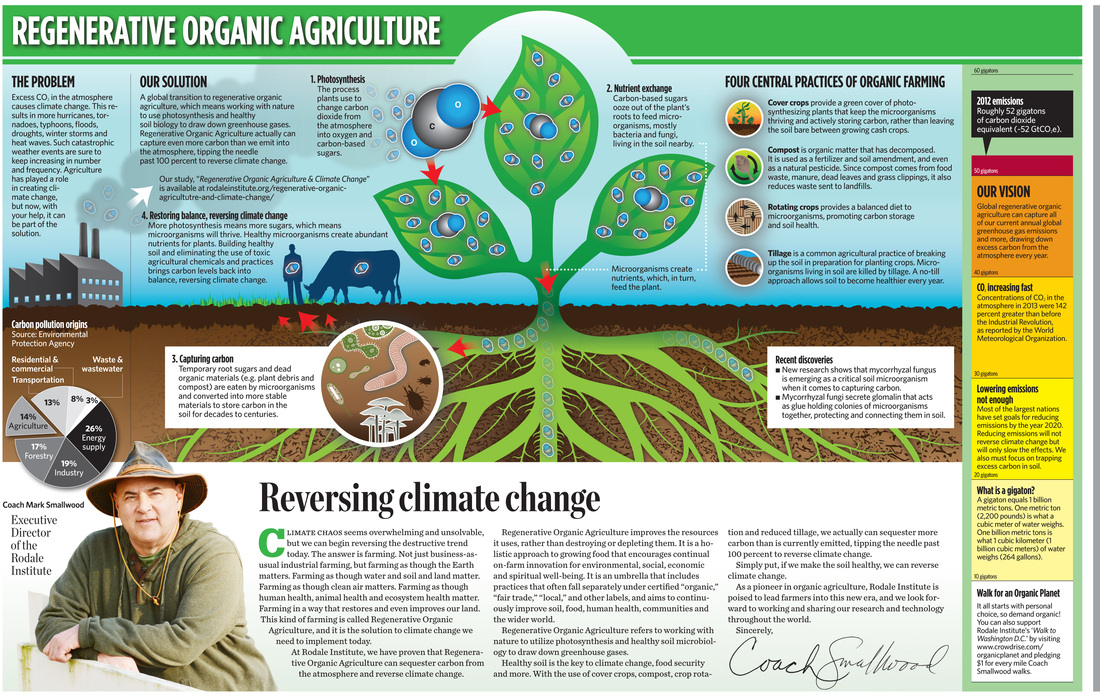
Regenerative agriculture is the paradigm shift that moves us from an extractive mindset to a restorative one. It is not about abandoning modern technology; it is about using science to work with nature rather than against it. Regenerative agriculture focuses on restoring the soil’s natural cycle. In a healthy, regenerative system, biology does the heavy lifting, not chemistry.
Why Thailand Needs the Revolution Now
Thailand is currently at an agricultural crossroads. We face fierce competition from global markets, rising labour costs, and an unpredictable climate. The conventional model relies on imported chemical fertilizers, leaving farmers vulnerable to global oil price fluctuations and supply chain disruptions.
When you rely on synthetic NPK (Nitrogen, Phosphorus, Potassium), you are not building an asset; you are paying a recurring rental fee for short-term growth. You are also creating a dependency. Chemical fertilizers kill off the soil’s natural microbial workforce. Once that workforce is dead, the soil can no longer fix its own nitrogen, decompose organic matter, or solubilize minerals. The farmer is then forced to buy more chemicals to compensate for the loss of natural fertility. It is a debt spiral.
Regenerative agriculture breaks this cycle. By focusing on soil health, you are building an asset. Healthy, carbon-rich soil acts like a battery, storing nutrients and moisture so you don’t have to provide them in a synthetic “drip feed” every single season.
The Artemis Angle: The Definitive Biotechnological Response
The greatest myth about regenerative agriculture is that it means “going backwards”—using primitive techniques that result in lower yields. That is a dangerous misconception. The truth is that regenerative agriculture, when paired with the right biotechnology, is the most productive path forward.
This is where Artemis & Angel enters the conversation. We provide the definitive biotechnological response to the chemical era. Our products, Bio-Plant and Pro-Plant, are not just “organic additives.” They are advanced microbial systems designed to jump-start the regenerative process.
  1. Bio-Plant as the Foundation: Bio-Plant is designed to re-populate the soil with the essential bacteria and fungi that have been wiped out by decades of chemical use. It turns your soil from a dead substrate back into a living digestive system.
  2. Pro-Plant as the Accelerator: Pro-Plant ensures that the plant is metabolically supported, allowing it to fully harness the nutrients that Bio-Plant makes available.
By using these tools, we enable a rapid transition. You don’t have to wait years for your soil to “heal” on its own. We provide the workers, the tools, and the catalyst to bring your soil back to life within a single growing season.
Economic Freedom and Market Supremacy
The regenerative revolution is also a financial revolution. When you lower your reliance on synthetic inputs, you immediately reduce your operational overhead. In a sector where margins are often razor-thin, the money you don’t spend on chemical fertilizer is money that goes straight into your pocket.
Furthermore, the world is demanding cleaner, healthier, chemical-residue-free food. By adopting regenerative practices, you are positioning your farm for premium markets. You are no longer just a commodity producer; you are a steward of quality.
You are not just farming for this season; you are farming for the next generation. We owe it to our land to leave it in better condition than we found it. The Regenerative Revolution is not a trend; it is the inevitable future of agriculture. It is a return to the natural order, powered by 21st-century science. Are you ready to lead the change?