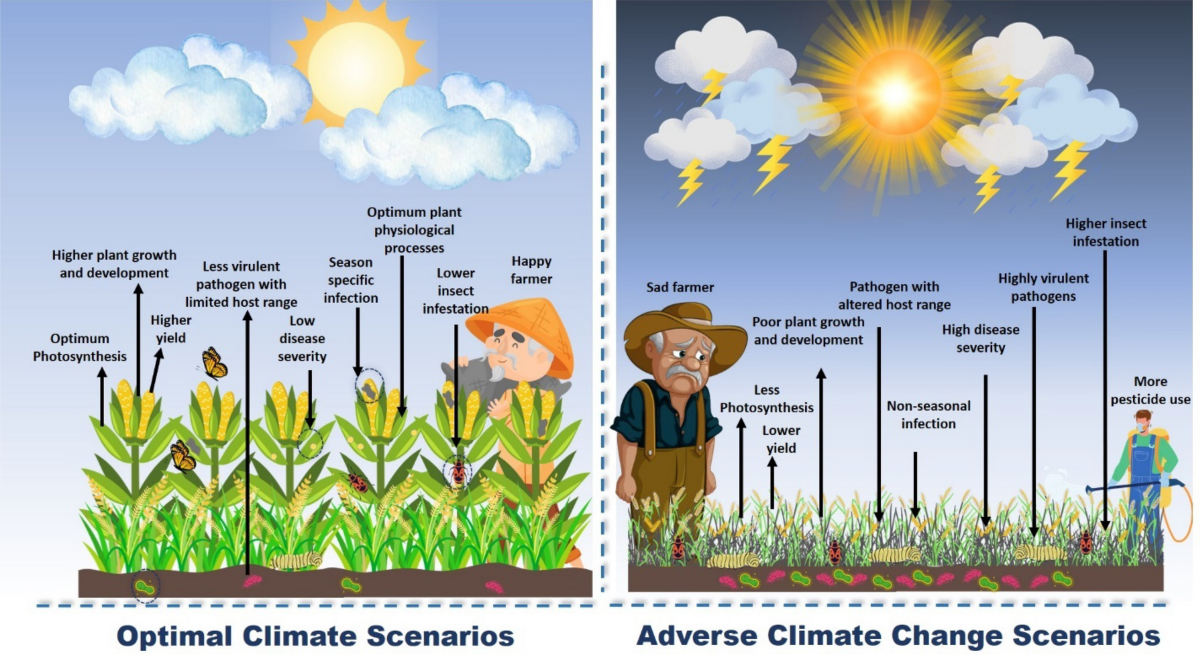
When the climate shifts—particularly during El Niño cycles—the challenges facing farmers extend far beyond water availability. Heat stress, erratic humidity, and changing wind patterns create an “opportunity window” for pests and pathogens. In the sweltering heat, the reproductive cycles of thrips, spider mites, and aphids accelerate rapidly, leading to population explosions that can decimate a crop in days. Simultaneously, erratic moisture levels often trigger fungal blooms like Phytophthora or Fusarium, which thrive in the weak, stressed root zones of heat-compromised plants.
Most farmers respond to this escalation with “chemical warfare”: spraying more pesticides, fungicides, and miticides. This is a dangerous trap. In a hotter, drier climate, the plant is already struggling to maintain its physiological functions. Adding toxic chemicals not only increases your operational costs but often weakens the plant further, creating a vicious cycle of dependency that we call the “Pesticide Treadmill.”
The Problem with Chemical Intervention
Traditional chemical pesticides have a “shock” effect. They may kill the target pest, but they rarely address the reason the pest arrived in the first place. Pests are opportunists; they attack plants that are signaling distress through weakened nutrient uptake, imbalanced sap chemistry, or disrupted sugar translocation.
Furthermore, these chemical sprays often destroy the beneficial insects—the natural predators of your pests—and damage the soil microbiome. When the soil biology is compromised, the plant loses its primary line of defense: its connection to the soil’s immune system.
The Artemis Angle: Resilience through Biology
At Artemis & Angel, we view pest management not as a battle to be won with poison, but as an optimization of plant health. A plant that is metabolically balanced and nutritionally optimized is, quite simply, an unattractive host for pests. We leverage two powerful biological mechanisms to protect your crops:
1. The Soil Microbiome as a First Responder
By applying Bio-Plant, you are not just fertilizing; you are inoculating the soil with a diverse workforce of beneficial bacteria and fungi. These microbes form a biofilm around the root zone, outcompeting pathogenic fungi for space and nutrients.
This is crucial for disease prevention. Pathogens like Phytophthora require an opening to infect a plant. When Bio-Plant microbes colonize the rhizosphere, they occupy the biological “real estate.” They produce organic acids and enzymes that physically degrade the cell walls of pathogenic spores, effectively creating a biological shield. Furthermore, these microbes are instrumental in the uptake of silica, a nutrient often ignored but essential for hardening plant cell walls against the mandibles of sucking insects like thrips.
2. Systemic Health with Pro-Plant
While Bio-Plant works from the ground up, Pro-Plant acts as a systemic booster. It ensures that the plant is not just surviving, but thriving, even under intense heat.
A plant supported by Pro-Plant has more robust sap flow and higher production of secondary metabolites—the plant’s own internal defensive compounds. When a plant has access to the full spectrum of micronutrients that our microbial formulas unlock, it produces higher levels of “phytoalexins.” These are natural chemical compounds that act as the plant’s internal pesticide. Pests will literally taste the difference and move on to a weaker host. It is nature’s way of saying “This plant is defended; look elsewhere.”
 admin
admin